Beyond the Bench
Travel, Photography, Diving & Skiing
Science is what I do — the open road, the ocean, the mountains, and the lens are where I recharge.
Travel
Travel has taken me to 15 countries across Asia, Europe, Africa, and the Americas — and to Antarctica. My dream is to visit every country in the world and connect with people from different cultures.
- 🇵🇭 Philippines
- 🇮🇩 Indonesia
- 🇬🇧 United Kingdom
- 🇰🇭 Cambodia
- 🇩🇪 Germany
- 🇱🇮 Liechtenstein
- 🇨🇭 Switzerland
- 🇰🇷 South Korea
- 🇺🇸 United States
- 🇪🇬 Egypt
- 🇲🇾 Malaysia
- 🇦🇷 Argentina
- 🇷🇺 Russia
- 🇯🇵 Japan
- 🇹🇿 Tanzania
Travel, in all its forms, is something I genuinely enjoy — liveaboard diving trips, long hikes, and mountain climbs, each with its own rhythm. I am drawn to raw, unspoiled nature, and to journeys steeped in history and culture.
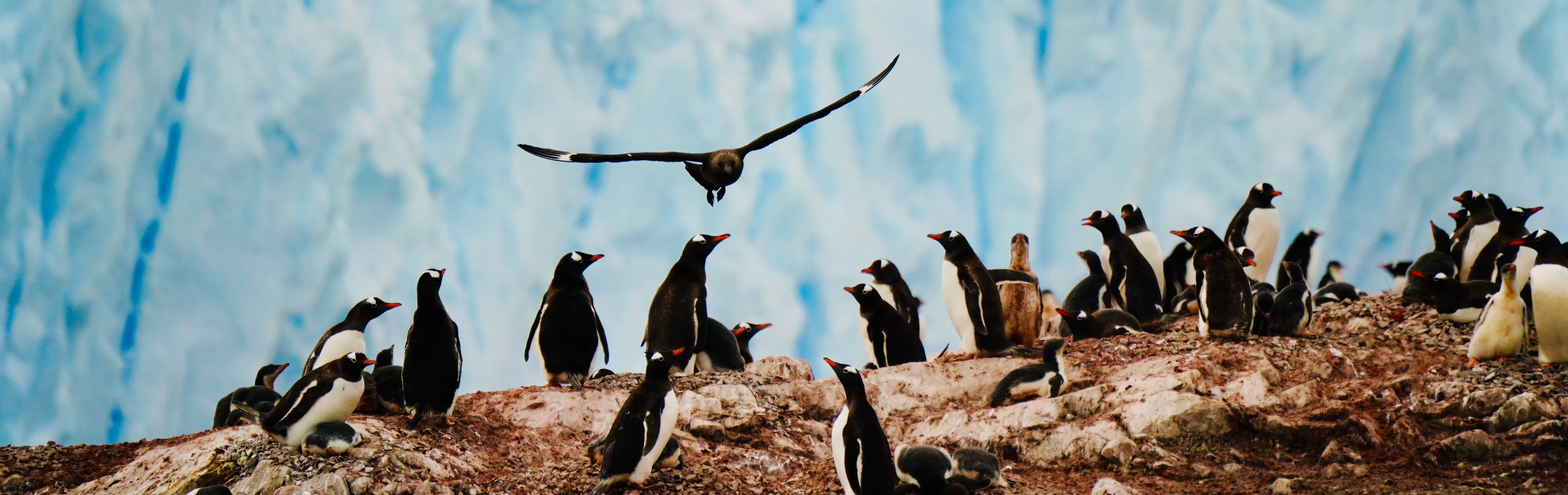
Many journeys have stayed with me. In early 2025, I set off on a voyage to Antarctica. Aboard the Sea Spirit, I crossed the Antarctic Circle and, once inside it, completed a polar plunge — the water was bitingly cold, yet it was the most direct encounter I could imagine with the White Continent. What moved me most, though, were the penguins and the array of Antarctic wildlife, the true residents of this frozen world going about their days undisturbed.
In June 2024, I climbed with friends to Uhuru Peak, the summit of Mount Kilimanjaro — at 5,895 meters, the highest point in Africa. Standing on top with a sea of clouds rolling below, all I could hear was the wind and my own heartbeat.
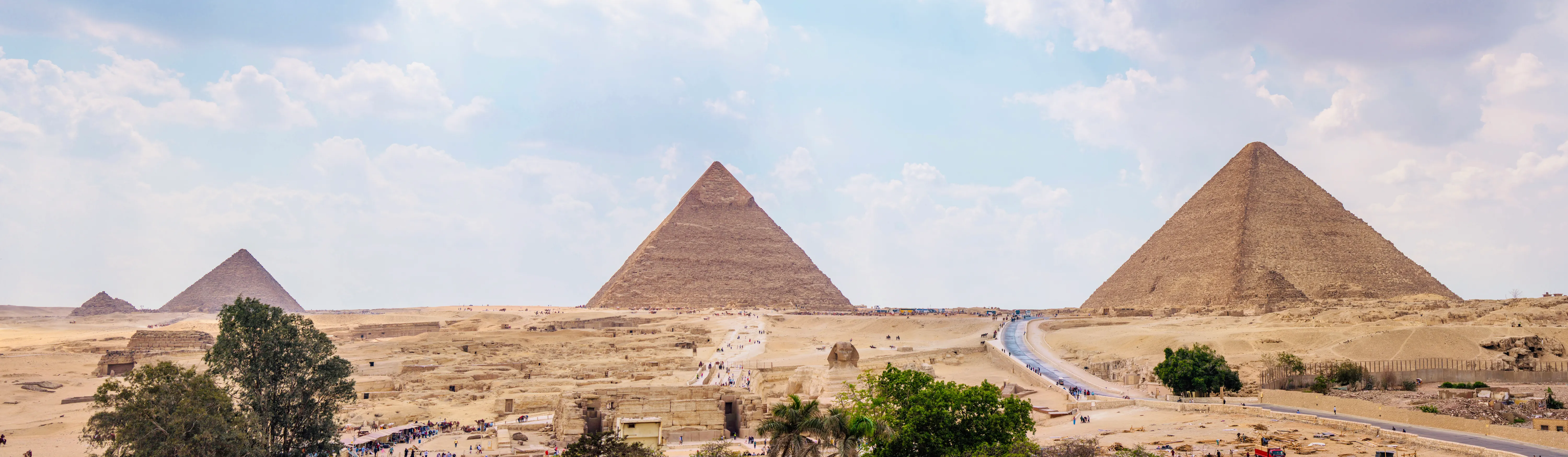
Egypt, too, I have visited twice, drawn back by its ancient and enchanting civilization. I photographed the pyramids from every angle and even stepped inside one, wandering its passages and chambers to feel the weight of millennia.
My love of hiking is what brought me to the Nakahechi route of the Kumano Kodo in Japan. The initial idea was simple — I wanted to walk a long trail. Only as I walked did I realize I had set foot on an ancient pilgrimage path of the UNESCO World Heritage network, one that winds through the forested mountains of the Kii Peninsula and links the sacred shrines of Kumano Sanzan. Step by step, it felt as though I were walking alongside pilgrims from a thousand years ago.
These memories remind me, again and again, how wonderfully diverse the cultures of our planet are — and it is that curiosity that keeps driving me toward more places. Two more routes are already on my list: the Jeju Olle Trail in South Korea, a 437-kilometer circuit that follows the coastline of Jeju Island, and the Camino de Santiago in Spain. Having looked at the full 800 kilometers of the Camino Francés, I chose the sensible shortcut — the final leg from Sarria to Santiago de Compostela, about 115 kilometers, with just as much scenery and considerably fewer blisters. Should you also hear the call of the trail, my inbox is always open — perhaps our paths will cross along the way.
Photography
Photography started for me in 2016, when I bought my first camera — a Sony α6300 with its kit lens, the 16-50mm F3.5-5.6. It did not take long to realize that lens was not sharp enough, so my first prime followed: a Sigma 35mm F1.4, which went with me to Cambridge, England, where I shot photo after photo. Later I added a Sony E 18-135mm F3.5-5.6 OSS, a versatile zoom that served me well for wildlife. But the APS-C sensor soon showed its limits at night and in background blur — so I stepped up to full frame.
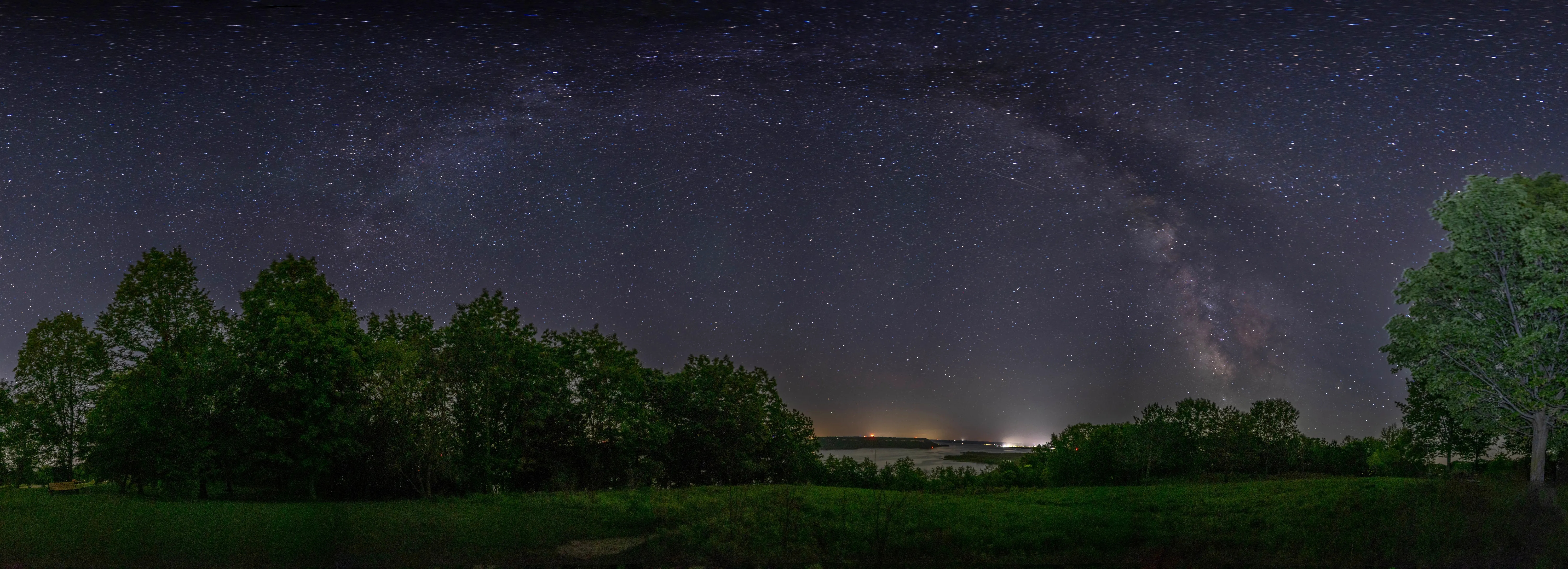
My current body is a Sony α7R III A, which I have used ever since. Over the years I have tried many lenses and kept two in my bag: a Viltrox 85mm F1.8 portrait lens, designed and made in China and remarkably affordable at around 250 dollars, and a Tamron 28-200mm F2.8-5.6. My next planned purchase is a Viltrox 16mm F1.8, an ultra-wide lens ideal for photographing the starry sky. During my research stay at the Mayo Clinic, I carried this camera with the Tamron 28-200mm F2.8-5.6, and a fellow Chinese doctor and I would often drive out to shoot together — memories I still treasure.
For travel these days, the Tamron 28-200mm F2.8-5.6 is basically the only lens I bring, because I need its reach for the shots I want; its long end proves invaluable whenever I have to shoot from far away — when I photographed the Himalayan range in Tibet, China, the telephoto reach let me frame both the highway and the mountains in a single shot, which was genuinely useful.

In recent years, as smartphone photography has improved, I have come to rely on my iPhone more and more — for anything under 100mm, I prefer it over my cameras. It not only takes the photo but also keeps a Live version and the location, small records that have become an important part of my memories. In Antarctica, I used it to photograph penguins, seals, and whales. One of its quiet advantages: even where there is no signal and no Wi-Fi, the GPS still logs exactly where each photo was taken, which told me precisely how far south I have ever been.
Last year I also bought my first drone, the DJI Flip. It is a compact machine, not the best against strong wind, but ideal for a beginner because its propellers are fully guarded. In February 2026, I brought it to Nusa Penida, Indonesia, where I shot a great deal of footage of Kelingking Beach. Today it has become an indispensable part of my kit for island trips.
Nusa Penida · Indonesia · February 20, 2026
There is one genre I had never tried until this October: macro. I have recently started shooting it underwater — the Diving section below has the pictures.
Diving
I earned my Open Water and Advanced Open Water certifications at Shark Bay, off the coast of Sharm El Sheikh. What draws me to diving is, simply put, the sea — I have always loved the coast, and the city I live in, Xiamen, is itself an island. At least once a year I take a holiday on a tropical or subtropical island, where the diving usually lasts five to seven days. Shore diving, snorkeling, and liveaboard trips all appeal to me, each in its own way. Exploring shipwrecks and getting close to some of the larger marine creatures never gets old. For me, diving is a good way to disconnect — the underwater silence is calming, and there is, conveniently, no bench to work at down there.
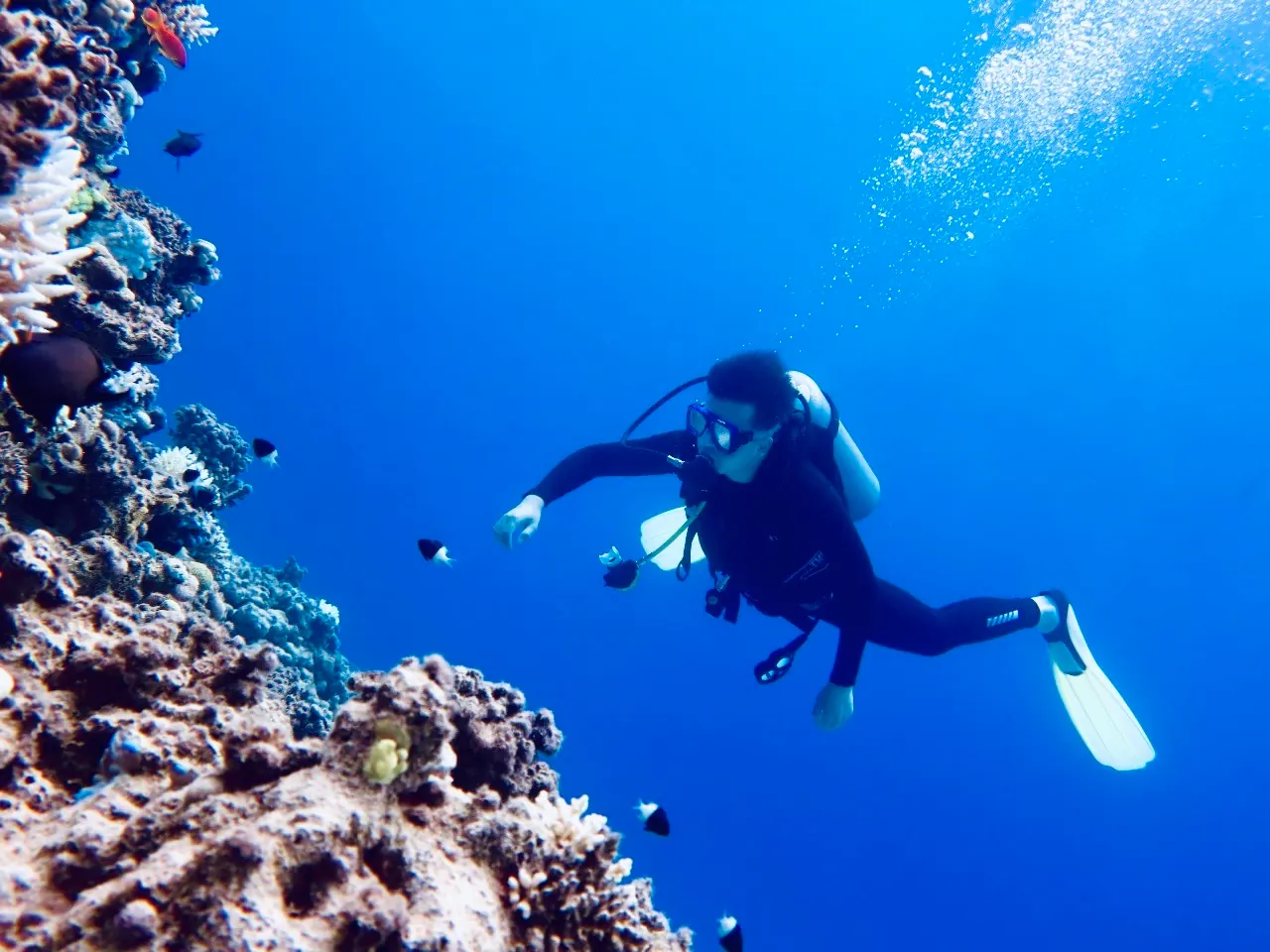

These days I also shoot underwater video with a DJI Action 5 Pro. To be precise, it is an action camera rather than an underwater camera — but with a waterproof housing, plus a moisture-absorbing sachet inside, it works reliably underwater and can record continuously. The camera is actually rated to go underwater on its own, yet some of my dives run deeper than its bare limit, so for those I always put on the housing.
Nusa Penida · Indonesia · February 22, 2026
Lately I have been admiring underwater macro photography — the tiny, intricate worlds that live among the coral are quite something. This October I tried it for the first time myself, shooting with an Olympus TG-7 in a SeaFrogs housing and a T21 focus light. If you have experience with it, I would love to hear from you.
So far I have only shot macro at Gato Island, Philippines. I have heard that Tulamben, on Bali in Indonesia, is a paradise for macro photography — the sand and gravel on the seabed there are black, which helps produce those dark backgrounds. It will be my next underwater macro destination.
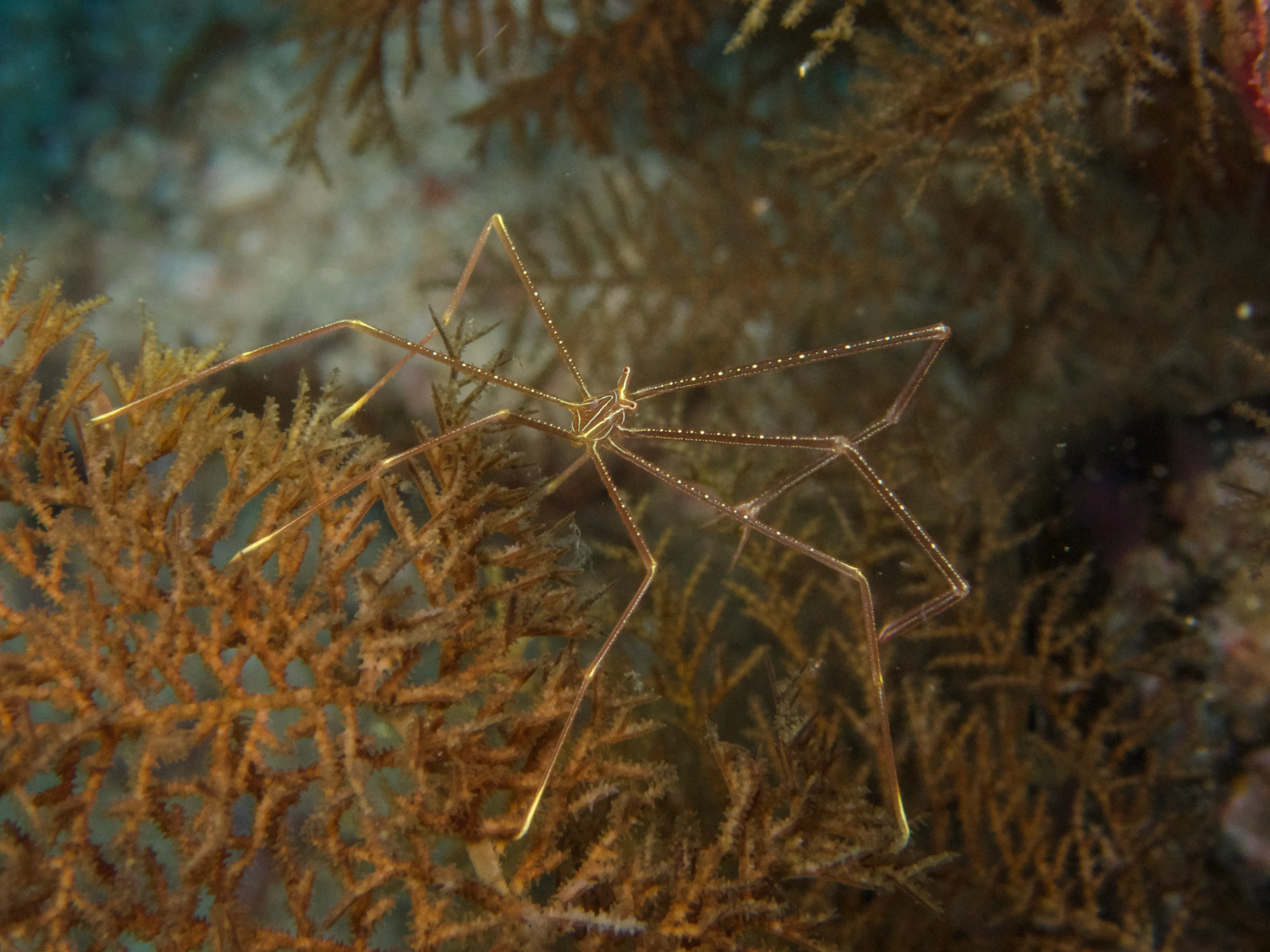
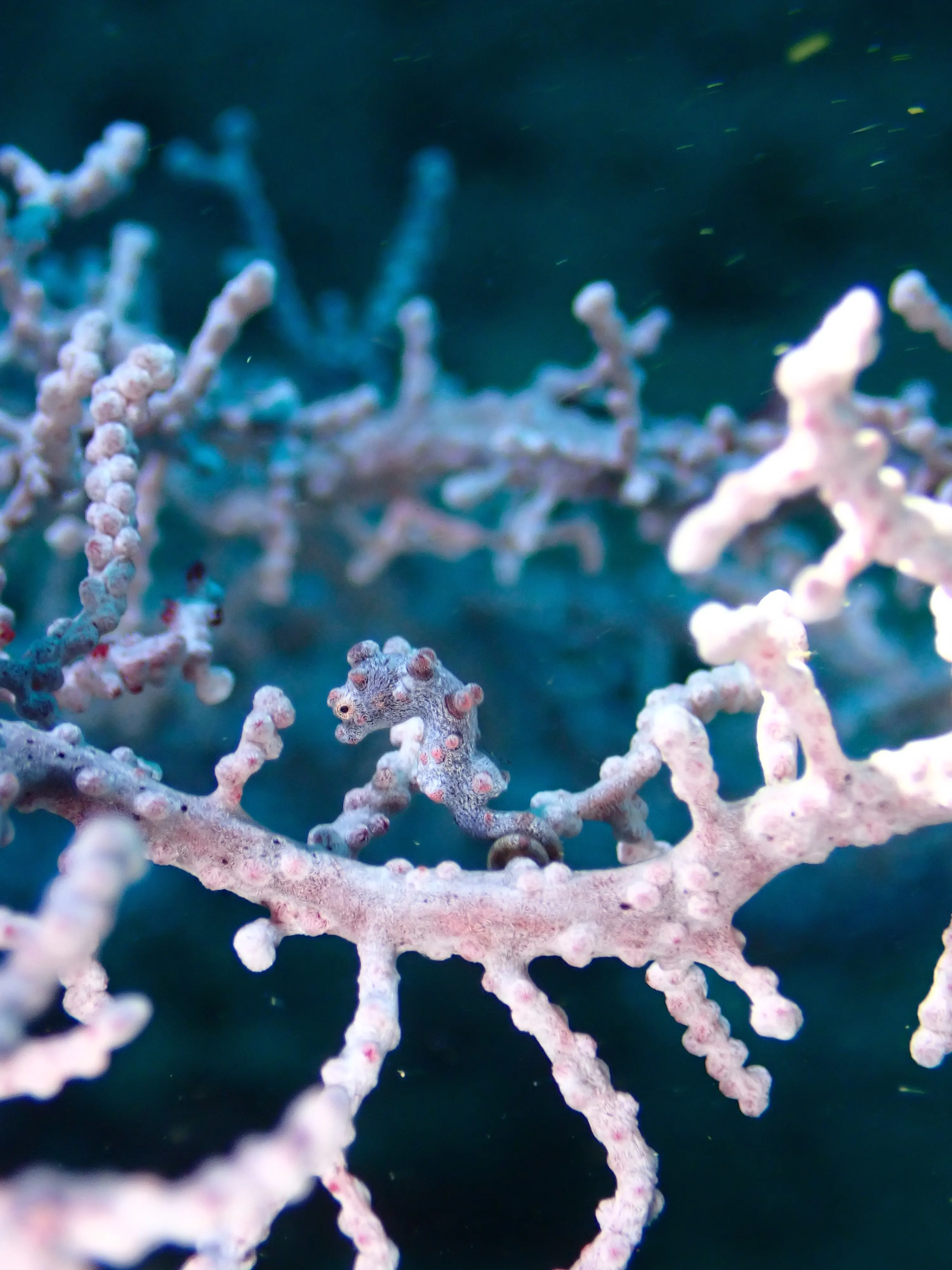
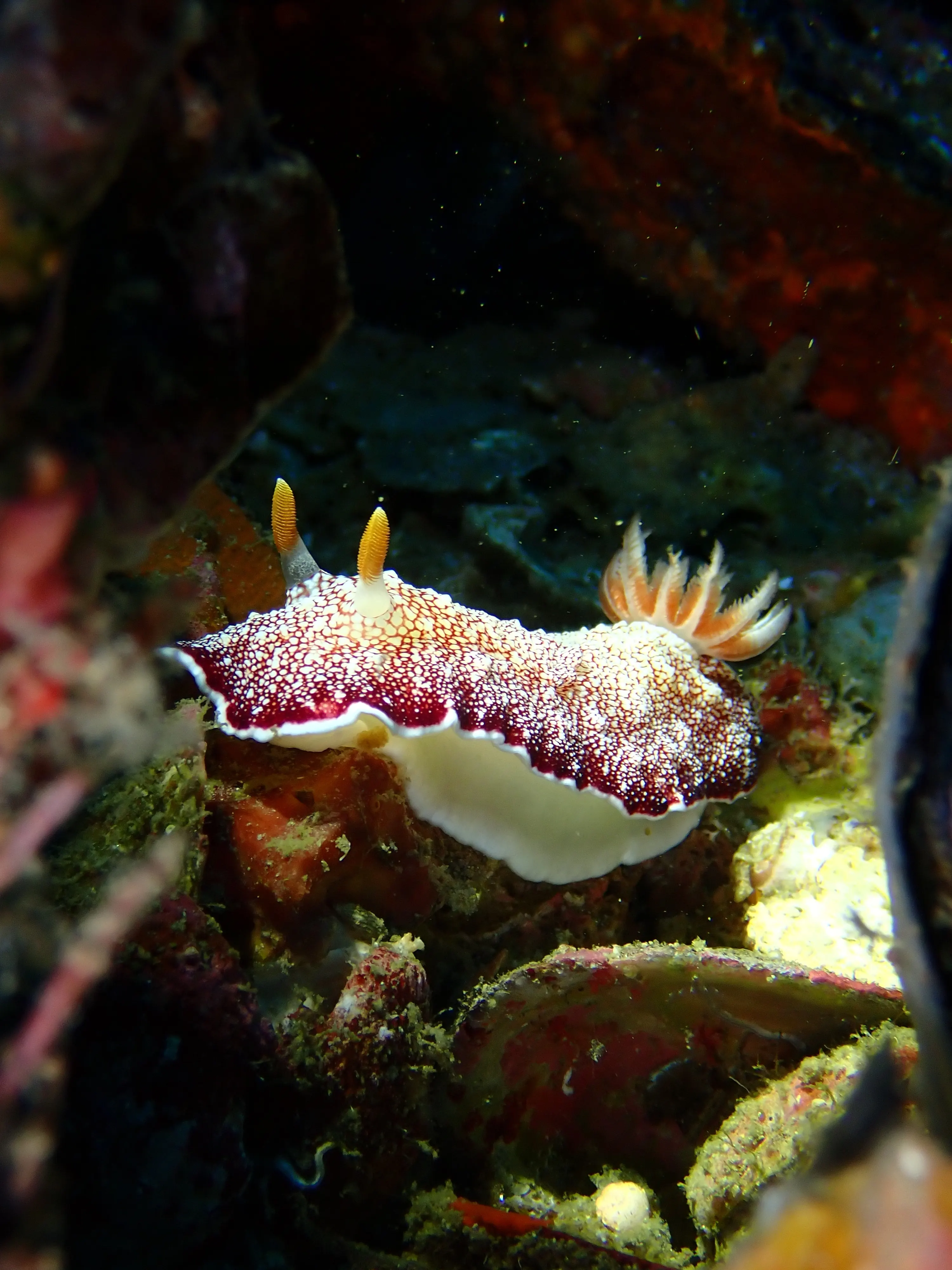
If you dive too, don’t hesitate to reach out. Perhaps we can plan the next trip together.
Skiing
I have to admit, I am a complete beginner when it comes to skiing — right now I am learning snowboarding. I took my first ski lessons in July 2026. Since Xiamen sits in the hot south of China, I practice at an indoor ski resort; it is the largest in our province, yet still a modest place, with a single 130-meter slope divided into an intermediate run and a beginner run. Modest as it is, I keep showing up and practicing.
Skiing has gained a deeper meaning for me this year. My favorite novelist, Keigo Higashino, passed away; ski resorts appear throughout his books, and it was his stories that first drew me to the sport. This December, I plan to ski at the Naeba Kagura and Nozawa Onsen resorts in Japan, in memory of a writer I admire deeply.